Wednesday, March 29, 2017

The Handmaid's Tale by Margaret Atwood

"It was after the catastrophe, when they shot the president and machine-gunned the Congress, and the army declared a state of emergency. They blamed it on the Islamic fanatics, at the time.
Keep calm, they said on television. Everything is under control.
I was stunned. Everyone was, I know that. It was hard to believe. The entire government, gone like that. How did they get in, how did it happen?
That was when they suspended the Constitution. They said it would be temporary."
"There were marches, of course, a lot of women and some men. But they were smaller than you might have thought. I guess people were scared. And when it was known that the police, or the army, or whoever they were, would open fire almost as soon as any of the marches even started, the marches stopped. A few things were blown up, post offices, subway stations. But you couldn't even be sure who was doing it. It could have been the army, to justify the computer searches and the others ones, the door-to-doors. . . .I didn't know many of the neighbors, and when we met, outside on the street, we were careful to exchange nothing more than the ordinary greetings. Nobody wanted to be reported, for disloyalty."

The Handmaid’s Tale is a brilliantly written terrifying look into a dystopian future version of the United States, a religious fascist ‘Republic of Gilead’, where women are valued only for their ability to bear children, where LGBTQ citizens and religious minorities and abortion doctors and political dissidents and anyone else who displeases the regime are executed and hung on a wall to rot in display, and where the “children of Ham” (a conservative Christian term for those of African descent) are being ‘resettled.’  We glimpse inside this terrifying, suffocating world through the eyes and scattered memories of a ‘handmaiden’ named Offred, learning the complicated history, personal and national, by which she has come to this intolerable position. Segments of the story seem too far-fetched to be possible—but are they? As you learn the slippery slope the led the USA into the Republic of Gilead, the future that Margaret Atwood imagines may not seem so far-fetched after all.


I’m not sure I’d call The Handmaid’s Tale a fun book, but it is an important book. It speaks truth in a way that is easy to read and hard to put down, that may follow you to sleep at night, that may echo in your mind when you hear the news and talk to those who endorse the joining of church and state. If ever there is a resistance read, this book is it, and is highly recommended for provoking thoughts of what could come if we are silent and complacent, and what we must do in order to ensure that this story is not our future. 
In addition, or if you are unable to read The Handmaid's Tale at the moment, Hulu has a new version of the story being released as a TV show, and it looks just as timely and chilling as the book. I can't wait to see it.

Saturday, March 25, 2017

Born a Crime by Trevor Noah

Born a Crime by Trevor Noah is another great resistance read. Noah, of Daily Show fame, released a book of memoir stories from his life growing up in South Africa, during and post-Apartheid. While at first glance, you might wonder what a book by a stand-up comedian has to say about justice and resistance, you won't have to wonder long. Trevor dives right in, explaining the context for how his birth was, quite literally, a crime, one worth a penalty of five years imprisonment, for mingling the races in apartheid South Africa. If you aren't yet familiar with the full extent of and rationale behind apartheid, just wait, because Trevor explains it in clear, concise language. He offers a horrifying examination of the full extent to which institutionalized racism can go, and what it's like to be different in a world that tries to put you in boxes by skin color and language.
Trevor talks passionately about race and tribe and language and even the right to have access to proper toilets (If, like me, you haven't pondered the social justice implications of bathroom access before, don't worry--you will.). He talks about poverty and hunger and the lengths to which one will go to avoid starvation. So many of Trevor's descriptions are viscerally vivid. (I gagged when reading about eating caterpillars and eyeballs.) For better or worse, you feel like you are right there with Trevor all the way, from his sheltered, primarily indoor childhood prior to the fall of apartheid, to his romantic misadventures in high school, his entrepreneurial adventures in his teenage years and beyond, and his sometimes tragic family relationships. He speaks of his mother with an affection that can't be denied, and of her devout faith with a wonderful balance of both affection and skepticism. Reading this story, I couldn't help but cheer for Trevor and his mother and eventually his brothers to escape their greatest problems and find happiness and success. I have a whole new level of respect for Trevor now, not the least of which is for his ability as a narrator--the audio version is read by him, and wonderfully captures the nuances of language and tone and timbre in the people around him as he grew.
So if you're looking for a fun, engrossing read that addresses a lot of heavy issues, like race, ethnic identity, poverty, hunger, abuse, religious faith, and more, in a way that makes you laugh and cry and really think about these issues, and ways to address them in your own life, look no further. I cannot recommend this book enough. I especially recommend the audio version, as hearing Trevor read it can help with pronunciations of words and language unfamiliar to American English-speaking readers.

Sunday, March 19, 2017

Why I March


Maybe you’re looking for a fun, easy book that encourages by reminding you why we resist--and that you are not alone. If so, Why I March: Images from the Women’s March Around the World is perfect for you, and has just been released. The book features photographs by Getty Images from the Women's March of January 21, 2017, when five million people in 82 countries and on all seven continents marched together with one voice on so many intersecting issues of justice and equality. Why I March involves little reading, as it’s mostly photographs of marchers and signs from the women’s march, in various cities in the USA and around the world. And yet it can also involve lots of reading, as you can pore through every image on every page, reading each of the signs in each of the big, beautiful pictures. You can see the emotions on the faces of the marchers. Hear their sentiments through their signs. And be encouraged. We aren’t alone, and we will resist! 

Additionally, all royalties raised by the publication and sale of this book will be donate to several nonprofits affiliated with the March, and there are wonderfully useful pages with lists of resources at the back of the book. A great book for some great causes. 

Don’t Think of an Elephant by George Lakoff


Don’t Think of an Elephant is written by Berkeley linguist professor George Lakoff, and in it he explains the concept of framing issues. Framing an issue is essentially being deliberate in choosing the words that you use to describe an issue in order to influence how people think of that issue. He discusses at length and with examples how the Republican Party has been extremely good at framing issues and how progressives are not good at it (progressives like facts too much!). I found it to be an easy read and very informative – I felt as though I understood more why it appears that some people vote against their own self-interest. Reading this book may give you more insight into how to talk to others about the issues currently being battled over in our country. (submitted by Julia Nichols)

My Life on the Road by Gloria Steinem


In her book My Life on the Road, Gloria Steinem takes the reader on a wonderful journey across America and through her life and understanding of feminism.  The book is an easy read – from the autobiographical details of Ms. Steinem’s life as a child and what led her to a life on the road as a community organizer to her discussion of feminism and the importance of listening to achieve intersectionality.  This book is full of the stories of some of the many people Ms. Steinem encountered on the road, and she spends a good deal of time on her relationships with Native Americans.  I loved reading this book – I was divided between feeling that we are working toward doing the right things today and feeling that all of this has been done before!  Overall, I found it to be inspiring, and I did not want it to end.  (submitted by Julia Nichols)

Thursday, March 16, 2017

MARCH for civil rights and social justice with John Lewis


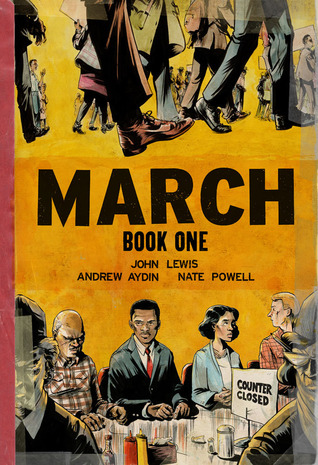
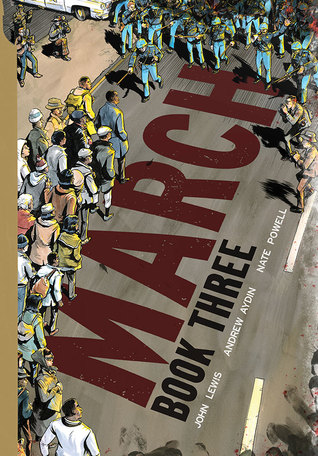
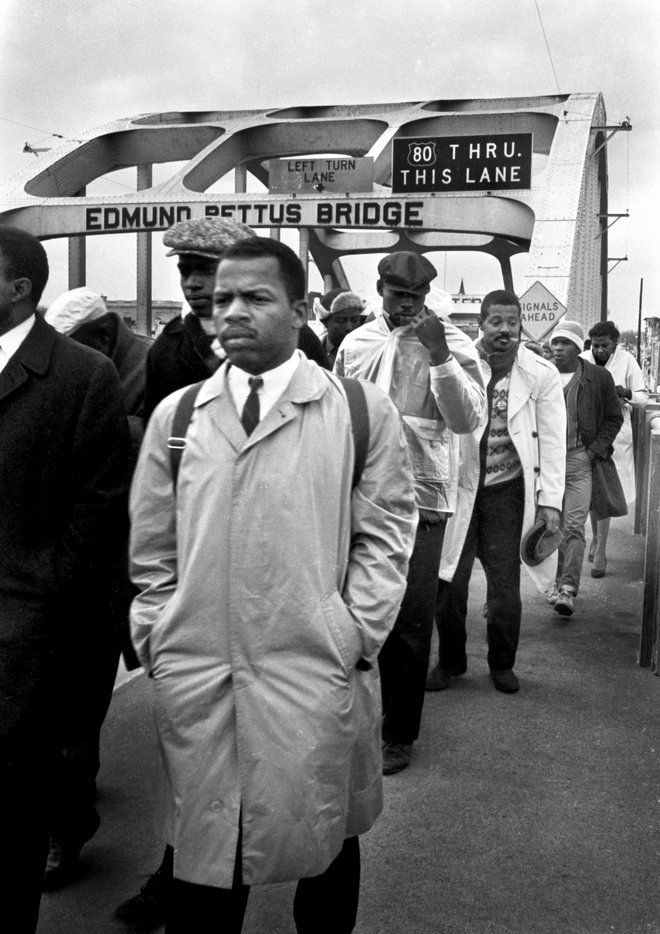
I’m making March, books one through three, by Congressman John Lewis, my first recommendations for Resistance Reads. While Lewis also tells the powerful story of his involvement in the Civil Rights movement in his (much larger) book Walking with the Wind, this three-volume graphic novel set is an easy and accessible way for both teens and adults to read his story—and no less powerful. Lewis co-wrote these graphic novels with his staffer, Andrew Ayden, and Nate Powell illustrates them in stark, evocative black-and-white art. There’s a sense of visceral immediacy in the art and writing that makes you feel like you’re there as it’s all happening, from Lewis’ childhood in rural Alabama to his early civil rights activism as a college student to the infamous Bloody Sunday march in Selma. These books made me cry. They made me stay up late reading them. They taught me about the civil rights movement. They’re that powerful.


Lewis isn’t as flashy as some of the other major early Civil Rights movement leaders. Martyrs like Martin Luther King, Jr. and Malcolm X rightly get a lot of attention. But Lewis, as the sole surviving member of the “Big Six” who planned and led the famous March on Washington, among other actions, has a lifetime of knowledge and wisdom about the struggle for civil rights in America, and he shares some of it with us in these books. Want to know how to resist oppression? Representative Lewis’ life example and and his work is a good place to start. Use these books as an engaging introduction to the struggle for civil rights for teens in your life, or as a powerful introductory telling of Lewis' story for yourself.
John Lewis marching in Selma
Congressman Lewis leading a Children's March from a panel presentation to his book signing, dressed in the same "costume" he wore to march in Selma so many years ago.


Tuesday, March 14, 2017

27 Books Every Woman In America Should Read

BuzzFeed's Doree Shafrir collected 27 Books to Read if You're Going to the Women's March. We went. Now it's time to catch up on our reading.

"These novels, essay collections, memoirs, histories, and more will help you understand why there is no feminism without intersectionality, why we should remember our history before we repeat it, and why Roe v. Wade is a lot more tenuous than you might think." (Doree Shafrir)
Read the full list on BuzzFeed.